Foundations Engineered for Load-Bearing Performance
Concrete Slab Installation in Griffin for garages, sheds, and new construction requiring structural support
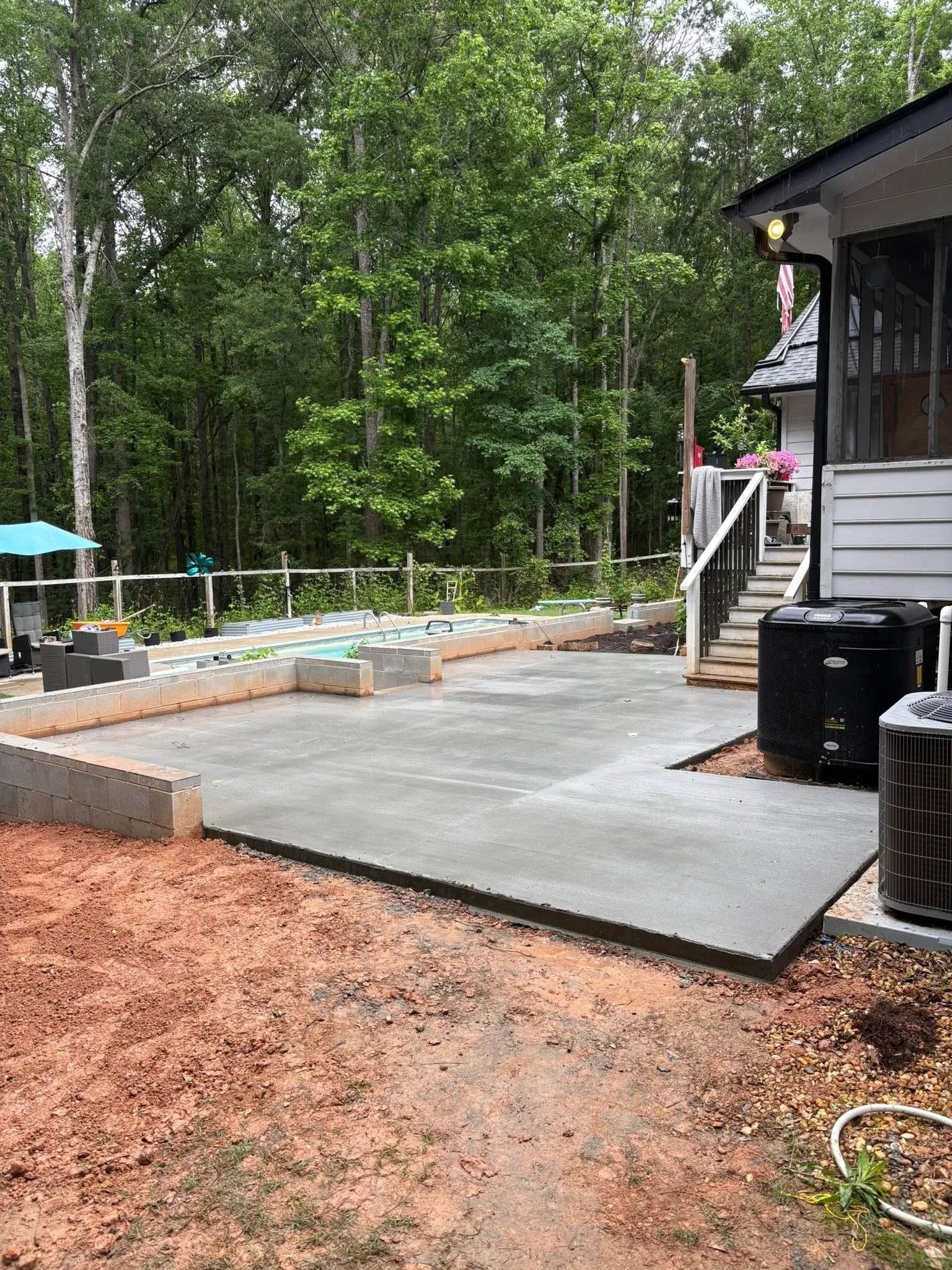
Slabs supporting buildings or heavy equipment demand precise grading and reinforcement to prevent cracking under load and settling as soil compresses over time. Accurate base compaction matters more for slabs than for driveways or patios, since uneven settling beneath a garage floor or shed foundation creates structural stress that concrete alone can't compensate for. Martinez Concrete Service prepares building sites by excavating to depth, compacting the subgrade in lifts to eliminate voids, and positioning rebar grids that distribute weight evenly across the slab.
The installation timeline runs from site preparation through final curing, with each phase critical to long-term performance. Grading establishes proper elevations relative to surrounding terrain, preventing water from draining toward the slab, and the base layer is compacted mechanically to achieve density that won't compress further under the concrete's weight and the loads placed on the finished surface.
Request a project quote to review slab specifications and site preparation requirements for your build.
What Proper Slab Installation Accomplishes
Reinforcement techniques for slabs vary based on the loads they'll carry and the span they need to support without internal columns. Rebar is tied in a grid pattern that holds concrete together as it cures and as weight is applied later, turning the slab into a structural unit rather than a surface layer that can crack independently at weak points. Thicker slabs—typically six inches for garage floors handling vehicles—distribute weight over a larger area and reduce stress concentrations that cause surface fractures.
You'll see a finished slab that remains level across its entire surface, without the high and low spots that develop when base preparation is rushed or skipped. The concrete cures to full strength over 28 days, during which controlled moisture loss prevents shrinkage cracks and surface scaling. Edges are formed cleanly where the slab meets grade, and control joints are cut or formed to manage minor cracking at planned locations rather than allowing random fractures to appear.
Slabs can be finished with different textures depending on their use—smooth trowel finishes for indoor spaces where appearance matters, or broom finishes for exterior slabs where traction is needed. Vapor barriers are installed beneath slabs in enclosed buildings to prevent ground moisture from migrating up through the concrete and affecting flooring materials or interior air quality.
What Property Owners Usually Ask
Those planning slab projects for new construction or outbuilding foundations often want clarity on thickness requirements, curing timelines, and how soil conditions affect the work.
What slab thickness is required for a detached garage?
Six inches is standard for garage slabs that will support vehicles, providing enough mass to distribute wheel loads without cracking and enough depth to accommodate the rebar grid needed for structural integrity.
How does mechanical compaction differ from simply grading the soil flat?
Mechanical compactors use vibration and weight to compress soil particles together, eliminating air pockets and increasing density so the base won't settle further once the concrete is poured and weight is applied.
When can construction proceed on top of a newly poured slab?
Light framing can begin once the concrete reaches sufficient strength to support worker weight and material loads, typically within a week, but full structural loads should wait until the 28-day cure is complete.
What role does rebar spacing play in slab performance?
Closer spacing creates a tighter grid that controls cracking more effectively, with 18-inch spacing common for residential garage slabs and tighter grids used for slabs supporting heavier equipment or spanning longer distances.
How do Griffin's clay soils affect slab foundation stability?
Clay expands when wet and contracts when dry, so slabs require thicker compacted gravel bases than would be needed in sandy soils, creating a buffer layer that absorbs soil movement without transmitting it directly to the concrete.
Martinez Concrete Service matches slab specifications to the building's intended use and site conditions, ensuring the foundation can handle design loads without settling or cracking. Contact us to discuss your slab project and schedule a site assessment.